

On Wednesday, NSW Parliament rejected a push to introduce new criminal penalties around abortion, voting 21–16 against a bill reproductive health advocates label as an attempt to re-criminalise abortion in the state under the guise of restricting sex-selective abortions. NSW’s existing abortion laws remain unchanged.
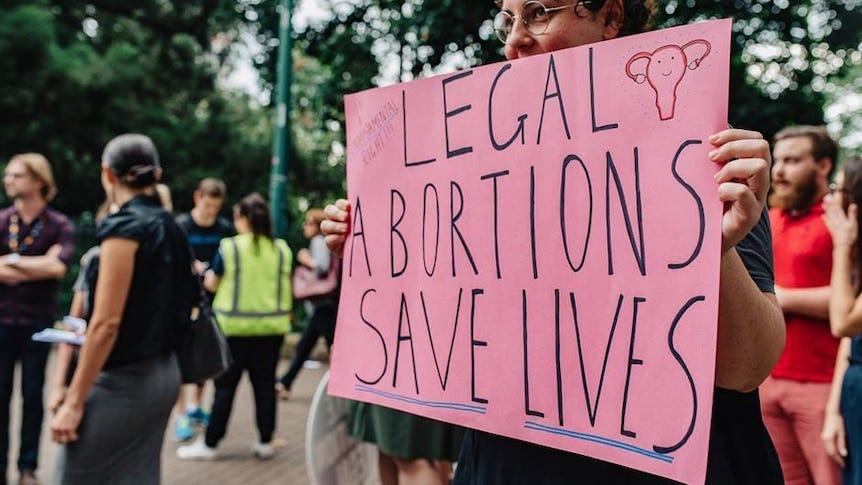
The private member’s bill, introduced by Libertarian MLC John Ruddick, would have made it a criminal offence to arrange, permit, perform or assist with an abortion for sex selection. Individuals, including health practitioners, could have faced up to five years in prison, a fine of 200 penalty units, or both.
NSW law already states that Parliament opposes abortion for the purpose of sex selection, while NSW Health clinical rules restrict the practice. What Ruddick’s bill would have added was criminal punishment, bringing the threat of prison back into the regulation of abortion care seven years after NSW removed abortion from the criminal law.
Supporters of the bill framed it as a women’s right issue and sex discrimination measure.
Sydney Anglican Archbishop Kanishka Raffel, who publicly supported the proposal, said, “Regardless of the broader debates about abortion itself, this Bill should unite Parliament against sex-selective abortion, which disproportionately targets unborn girls.”
“This bill was never about protecting girls—it was a thinly veiled attempt to incrementally re-criminalise abortion and make it harder to access,” Dr Cohn said.
Opposing the bill, Greens health spokesperson and former GP Dr Amanda Cohn said, “The agenda of those pushing this bill has been clear from the start,” labelling it an attempt to re-criminalise abortion in NSW.
Cohn argued that the prospect of severe criminal penalties would deter healthcare workers from providing abortion services.
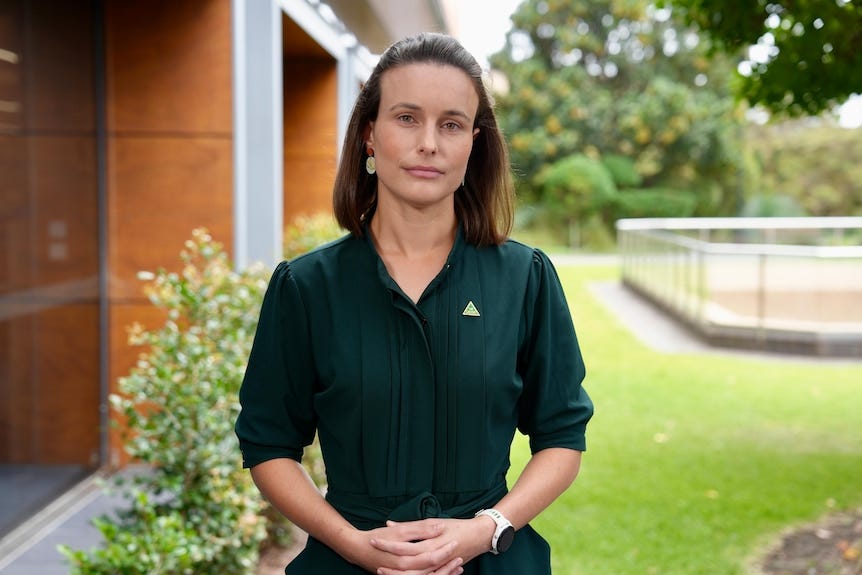
“Today the NSW Parliament reaffirmed that abortion is legal health care, in the face of an organised campaign to erode our hard-fought rights for reproductive choice,” said Dr Cohn.
“This bill was never about protecting girls—it was a thinly veiled attempt to incrementally re-criminalise abortion and make it harder to access,” Dr Cohn said.
“This bill is not really about sex-selective abortions, which the evidence shows is not happening in NSW,” said Cohn, who is a former regional GP and abortion care provider. “Anti-abortion campaigners are lobbying politicians to incrementally erode abortion rights.”
“Health professionals have told me they will not continue to provide abortion care if the laws are successful, as the uncertainty and risks are too great. Practitioners shouldn’t be put in a position of being expected to doubt, interrogate, and police their patients.”
The vote came amid a renewed political campaign over abortion in NSW.
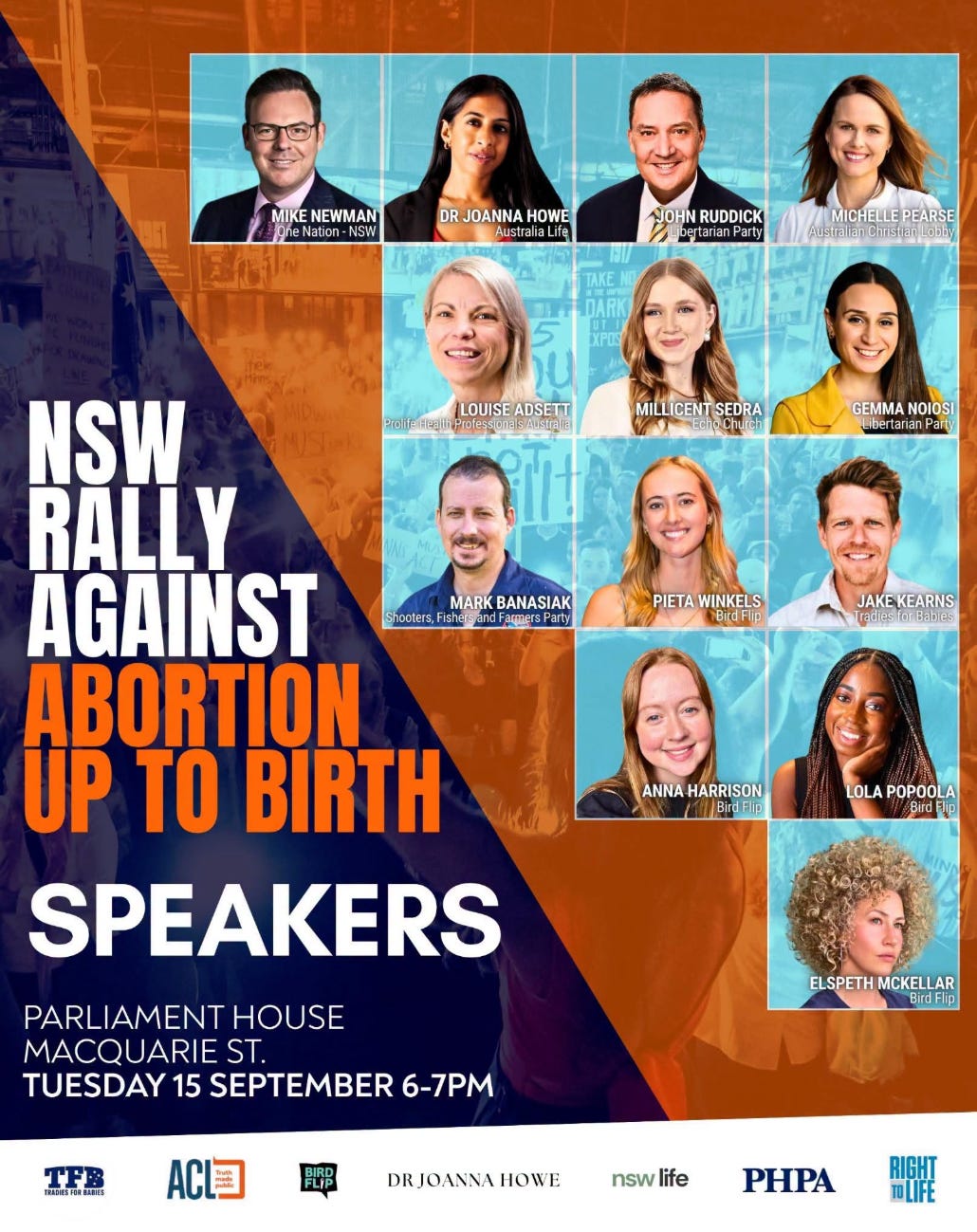
Hours before the bill was considered, NSW One Nation leader Mike Newman appeared alongside anti-abortion campaigner Joanna Howe at a rally outside Parliament.
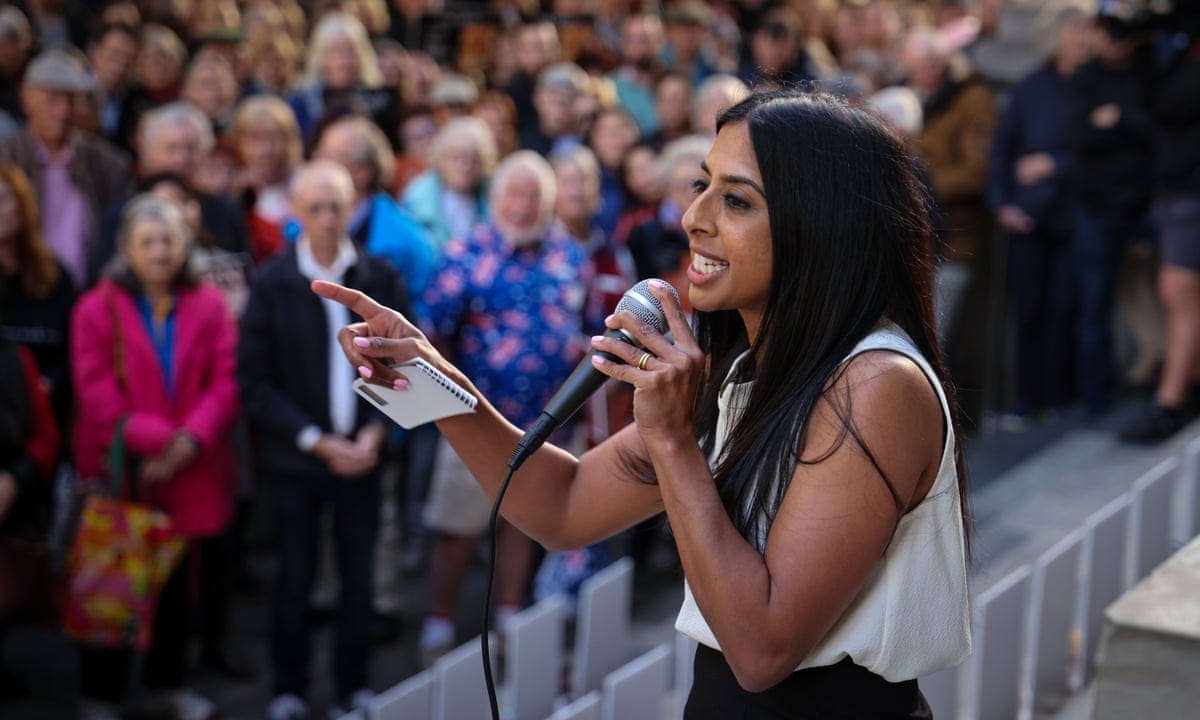
During the rally, Newman told the crowd One Nation wanted to “stop abortion” before later saying he had misspoken and was referring specifically to sex-selective and later-term abortions.
“We want to support people who want to make sure that abortion rights—we want to stop them,” Newman said. “We want to make sure that same-sex … oh sorry, abortion is stopped… We want to make sure that people have the right to life and we will vote for you in favour of that.”
Newman also said that if One Nation gained power, it would put the issue back on the parliamentary agenda.
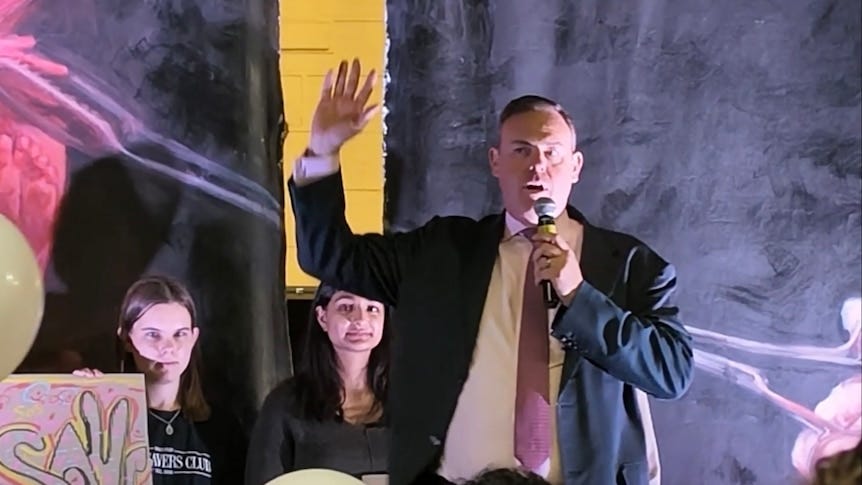
But just how prevalent is sex-selective abortion in NSW? A NSW Health review, tabled in Parliament, examined 15,973 abortions reported between October 2019 and September 2020, where just 13 were recorded as having been performed solely for sex selection—and NSW Health concluded that 10 of those were considered likely reporting errors because the terminations occurred before nine weeks, when there was no readily available and reliable way of determining fetal sex. That left three notifications in the dataset, equivalent to around 0.02 per cent of reported abortions.
Supporters of the bill have pointed instead to a 2025 study examining historical Australian birth data that identified unusually male-skewed birth ratios among some migrant populations. The researchers said the patterns could be consistent with prenatal sex selection but explicitly noted that their study did not establish causation.
The debate also revived arguments NSW Parliament confronted when abortion was finally decriminalised in 2019. Then, Labor’s Penny Sharpe warned Parliament that “criminalising abortion does not stop abortion, it just makes it unsafe.”
Seven years later, the defeated bill would have once again attached prison sentences to the provision of some abortions.
Who voted what?
The proposed legislation was the subject of a conscience vote, allowing Labor and Coalition MPs to vote independently of their parties.
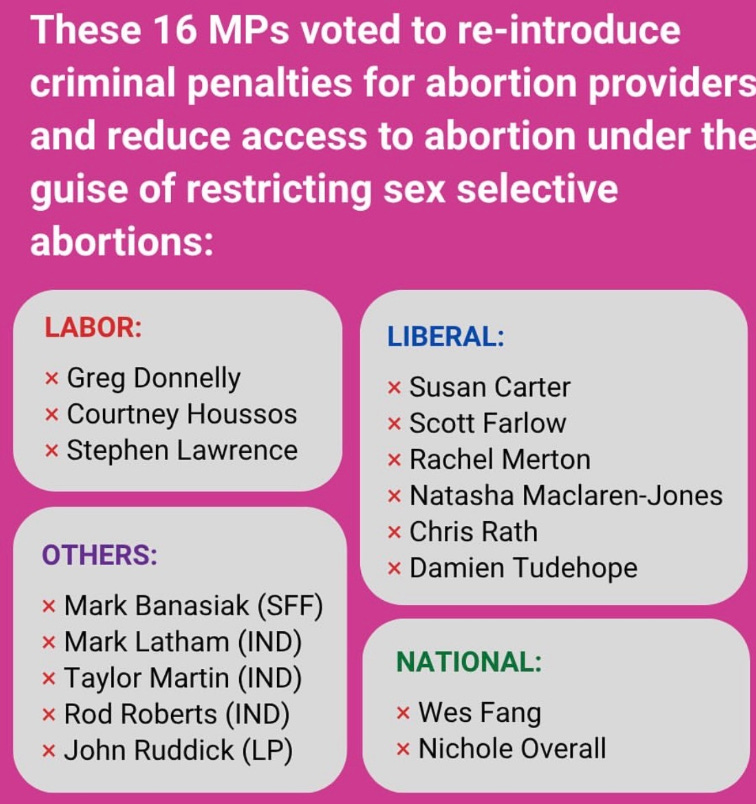
Voting cut across party lines. Labor’s Anthony D’Adam, Sarah Kaine, Penny Sharpe and eight other Labor MPs also voted against the bill, while three of their caucus colleagues—Greg Donnelly, Courtney Houssos and Stephen Lawrence—voted for it.
The Coalition was similarly divided: Liberals Aileen MacDonald, Jacqui Munro and Natalie Ward voted against the bill, while six Liberal colleagues supported it. Nationals Scott Barrett and Sarah Mitchell voted against it; Wes Fang and Nichole Overall voted in favour.
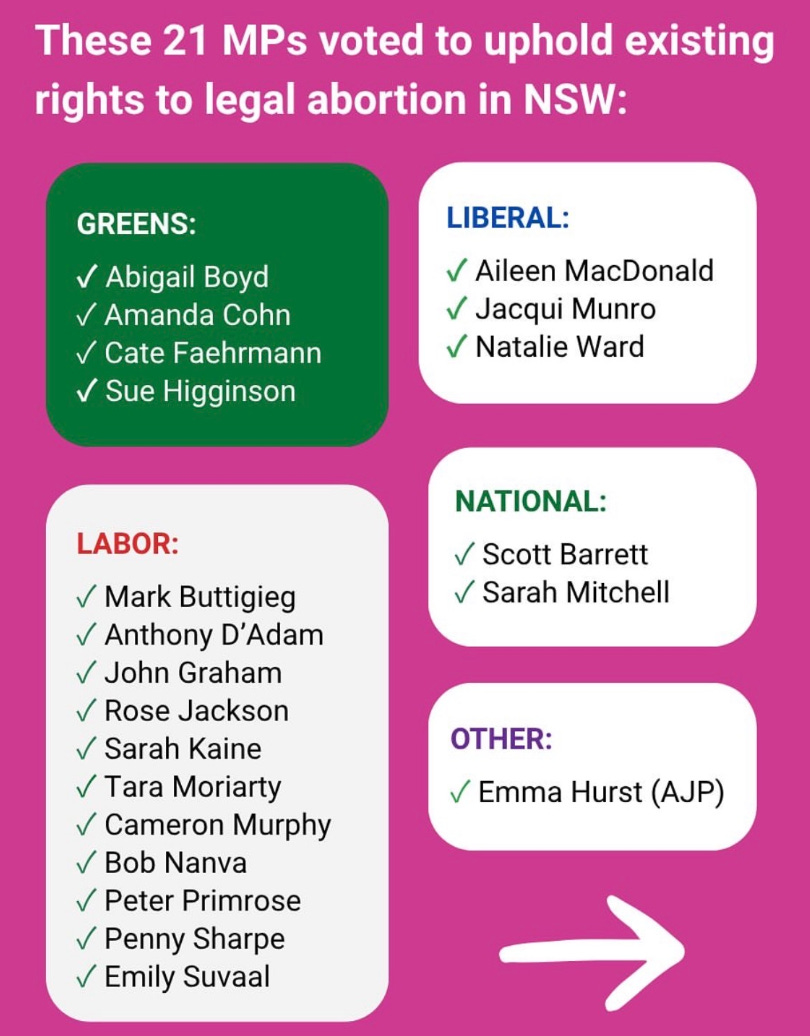
That cross-party opposition echoed Health Minister Ryan Park’s position before the vote. Park had argued there was no evidence of widespread sex-selective abortion in NSW and said abortion should not be returned to the criminal law.
NSW Greens health spokesperson Dr Amanda Cohn welcomed Wednesday’s result, saying Parliament had reaffirmed that “abortion is legal health care.”
Cohn and other opponents argued the threat of criminal penalties could deter doctors and other health professionals from providing abortions, particularly in regional communities where services are already limited.
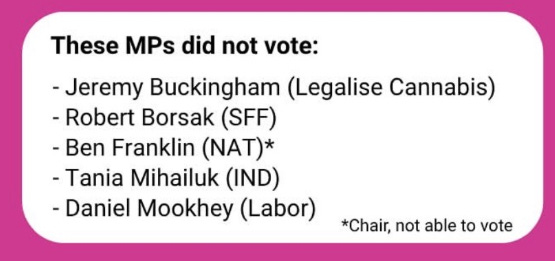
Five MPs did not vote, including Legalise Cannabis MP Jeremy Buckingham, Shooters, Fishers and Farmers MP Robert Borsak, Independent Tania Mihailuk and Labor Treasurer Daniel Mookhey. Nationals MP Ben Franklin was chairing proceedings and therefore unable to vote.
The final vote—21 to 16—left NSW’s existing abortion laws unchanged.
Attention turns to abortion access
With the proposed criminal restrictions defeated, the Greens are now calling for the NSW Government to expand access to abortion through the public health system.
Cohn said abortion services were still not reliably available through public hospitals across NSW and called for more hospitals to provide abortion care, alongside greater support for GPs providing early medical abortions.
Access has remained a significant issue despite abortion being decriminalised in NSW in 2019.
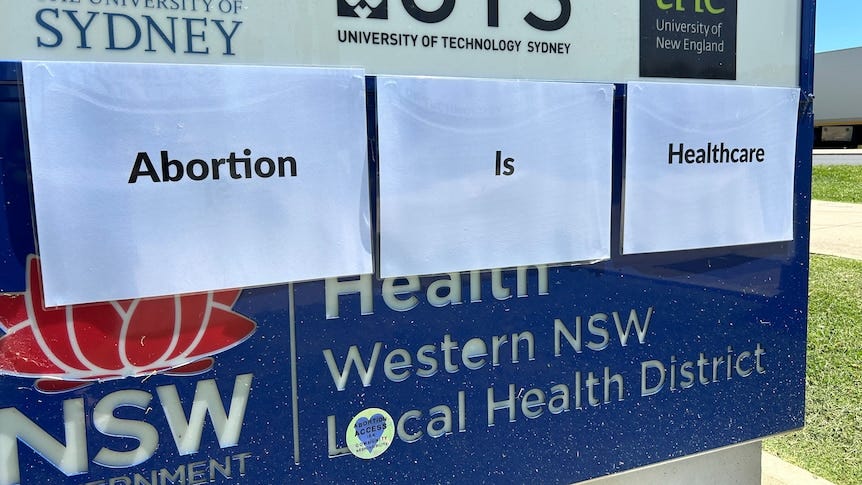
NSW Health’s current guidance confirms abortion is legal health care in the state. For pregnancies of 22 weeks or less, the decision to have an abortion rests with the pregnant person. Abortions after 22 weeks require involvement from a specialist medical practitioner under the legislation.
The state’s framework has also recently expanded the health professionals who can provide early medical abortion care, with appropriately qualified nurse practitioners and endorsed midwives able to provide medical abortions up to nine weeks within their scope of practice.
“The best way to safeguard access to abortion from further attempts to restrict it,” Cohn said, “is to embed abortion care within the public health system.”
The NSW Government has acknowledged barriers to abortion care, particularly for people experiencing geographical or financial disadvantage. A recent NSW Health grant program sought providers to deliver additional low- or no-cost medical and surgical abortion services for women facing barriers to timely care.
For the Greens, Wednesday’s vote therefore settles only one part of the abortion debate.
“The best way to safeguard access to abortion from further attempts to restrict it,” Cohn said, “is to embed abortion care within the public health system.”
The Jezebel Report is an independent feminist publication investigating faith, power, purity culture and church accountability.
Have information, documents or experiences relevant to this investigation?
Follow The Jezebel Report on Instagram @thejezebelreport and on Facebook
Follow Samantha Blok on Instagram @samanthablok_ and on Facebook