

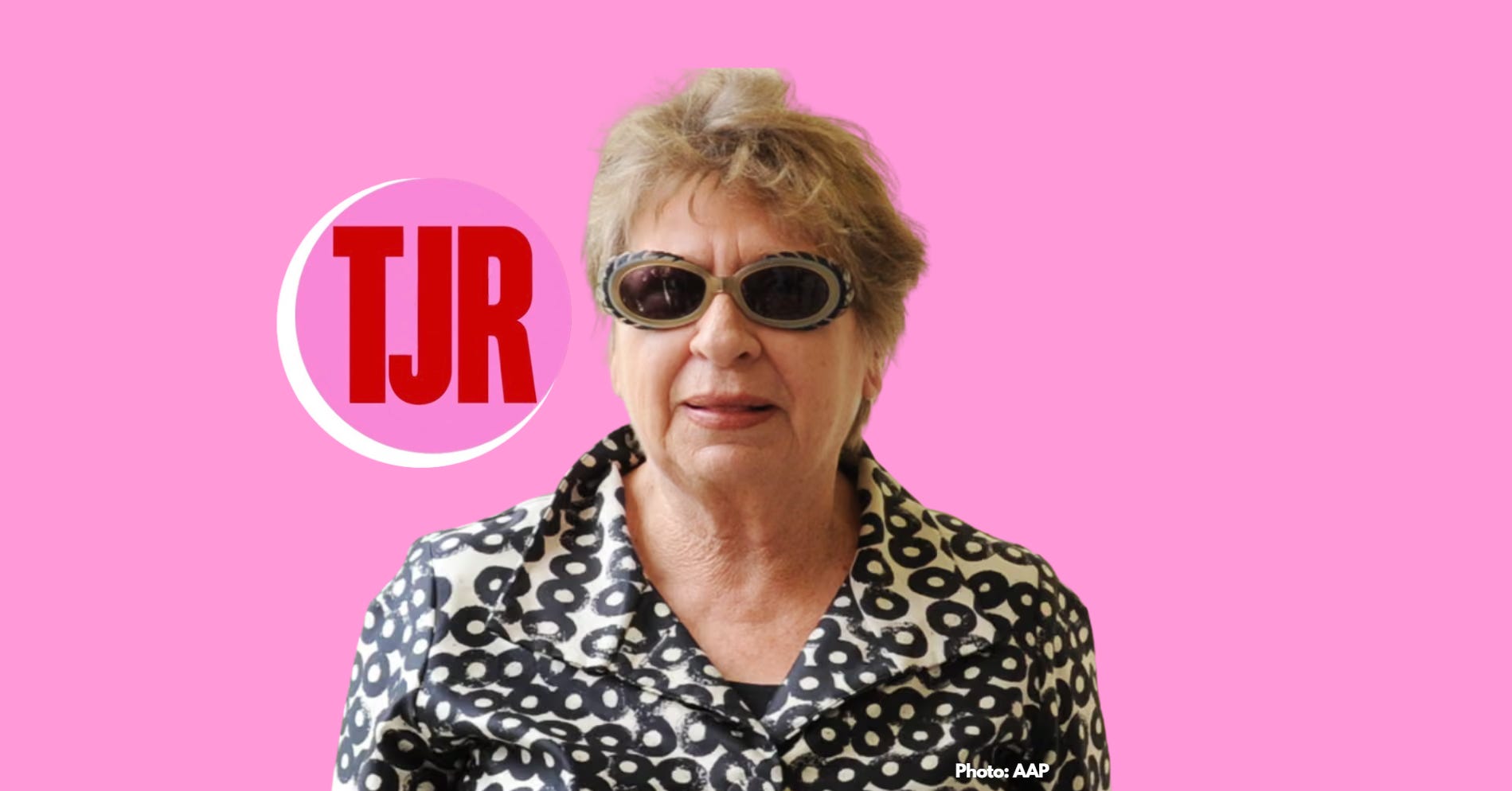
Mary Gaudron, the first woman appointed to the High Court of Australia and one of the country’s most influential legal figures, has died aged 83.
The High Court confirmed her death on Sunday, describing her contribution to the court over 16 years as “profound” and acknowledging her role in advancing women within the legal profession and judiciary.
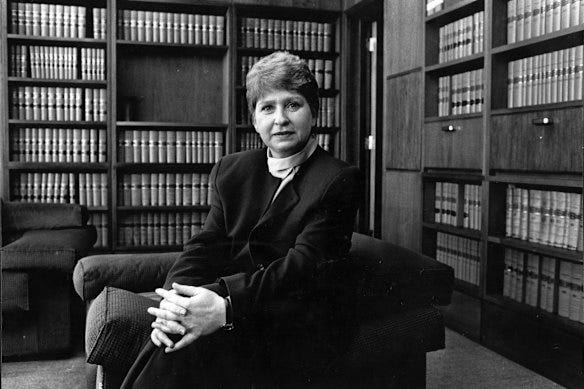
Her death has also prompted renewed attention to the ideas that shaped her career—on equality, power, representation and the limits of symbolic progress—many of which remain strikingly relevant today. Gaudron’s career and legacy stretch far beyond the fact she was Australia’s first female High Court judge.
Before the High Court came equal pay
Gaudron was born in Moree, regional New South Wales, in 1943, the daughter of a railway worker.
Her path to the most powerful court in Australia was hardly predetermined. As a young woman, she was reportedly advised by a local solicitor that she was aiming too high: girls didn’t do law; perhaps she should consider working at the telephone exchange instead.
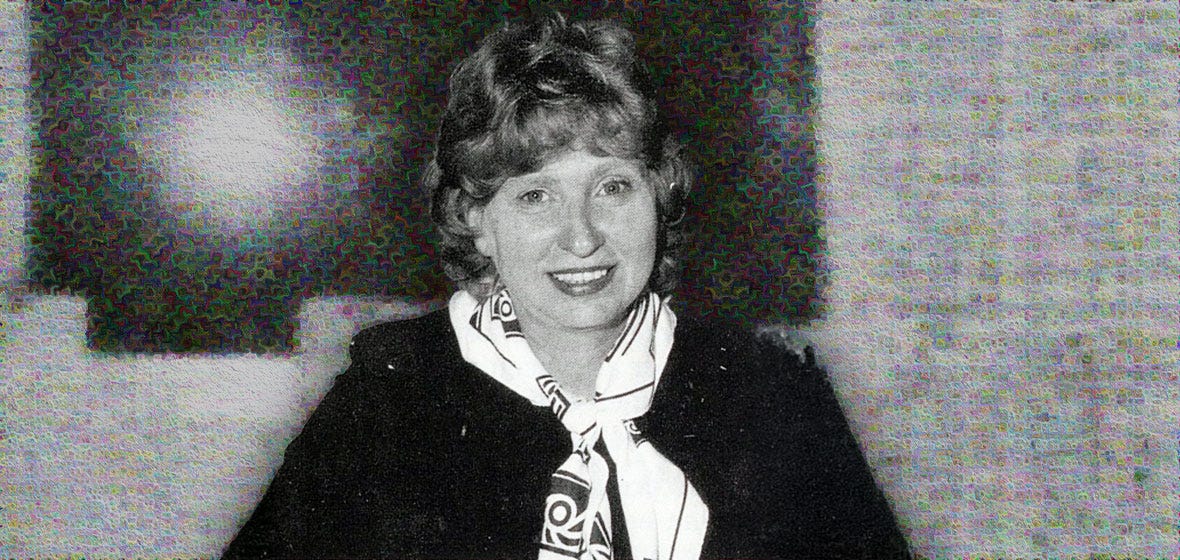
She did not take his advice. Instead, Gaudron attended the University of Sydney on a scholarship, graduating with first-class honours and the University Medal in Law. She was called to the NSW Bar in 1968.
Allowing women into powerful institutions is not the same thing as making those institutions equal.
Former High Court Justice Michael McHugh recalled selling his chambers to Gaudron when she was a young lawyer, only for the other barristers on the floor to refuse to accept her as a member. McHugh later wrote that the male barrister eventually accepted in her place was capable, but “was not in Mary Gaudron’s class”.
In 1972, four years after she was called to the Bar, Gaudron became the first woman appointed to the NSW Bar Council.
That same year, aged 29, she became the first woman to represent the Commonwealth in a national wage case, helping dismantle one of the most fundamental mechanisms of women’s economic inequality.
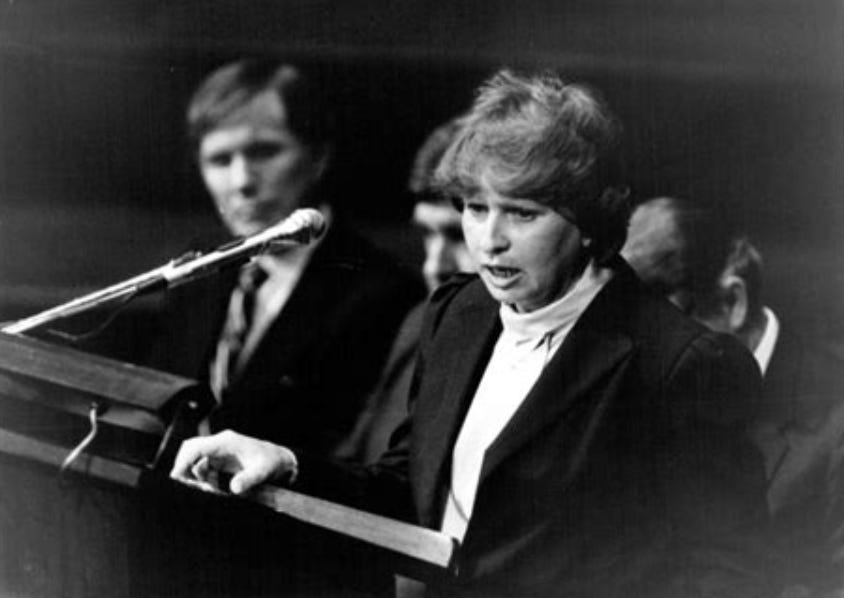
The issue before the Conciliation and Arbitration Commission went to the heart of one of feminism’s longest-running economic battles: what does “equal pay” actually mean when work traditionally performed by women has historically been valued less?
Gaudron argued for ‘equal pay for work of equal value’, helping establish a principle that went beyond simply paying a woman and man the same wage for an identical job.
It is difficult to overstate the significance of this case for women. The gender pay gap did not disappear in 1972, of course, but the decision challenged the premise that female-dominated work could simply be considered less valuable than male-dominated work.
A voice for women in the workforce
Two years later, Gaudron was appointed deputy president of the Commonwealth Conciliation and Arbitration Commission. While there, she sat on another case that materially changed women’s working lives: the 1979 Maternity Leave Case.
The decision established a standard entitlement of up to 52 weeks of unpaid maternity leave for eligible permanent workers, including job protection on return. The entitlement was subsequently extended across federal and state awards covering a large proportion of the Australian workforce.
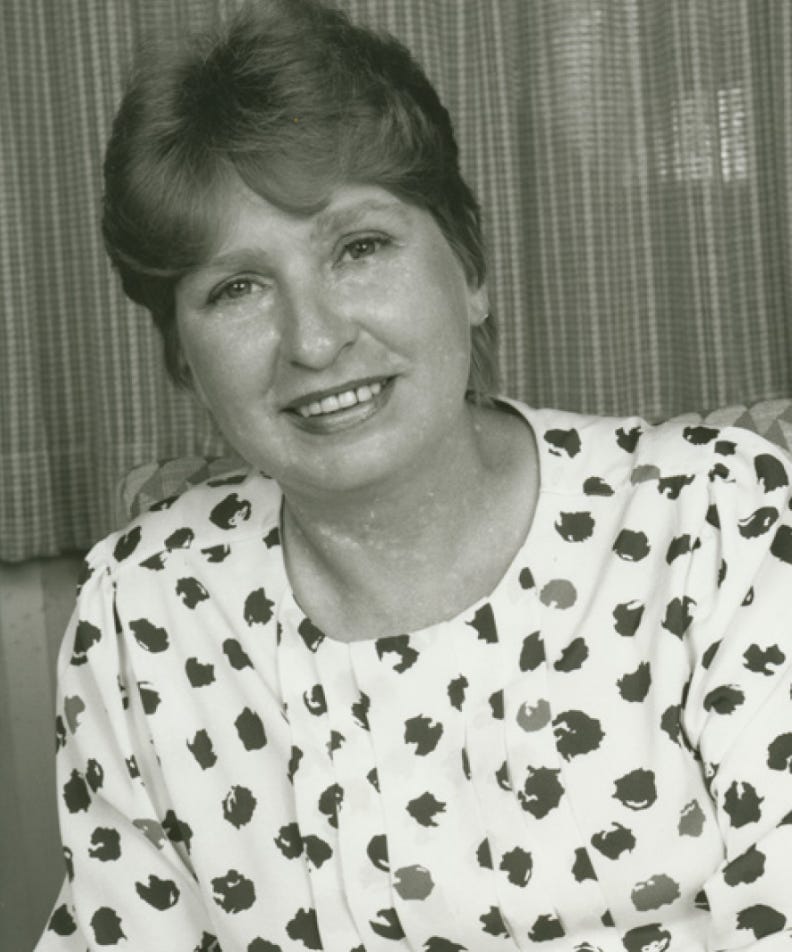
Today, the idea that a woman should not automatically lose her job because she has a baby sounds fairly basic, but until that point, it wasn’t.
Gaudron went on to become NSW Solicitor-General in 1981—the first woman to hold the equivalent office in any Australian state—and NSW’s first female Queen’s Counsel. In 1987, at 44 years old, Mary Gaudron became the first woman appointed to the High Court of Australia. For her entire 16 years until retirement, she was the only woman sitting on the Court.
In 1989, two years after she became the first woman on the High Court, Gaudron told her male judicial colleagues she was going to speak to a gathering of women lawyers. According to her, they reacted as though she had announced she was going to start “dancing the Can-Can,” arguing there was no discrimination in law and no need for women to have their own professional organisations. They claimed Gaudron was “being discriminatory” herself against men for even attending.
“Their attitude was short-lived,” said Gaudron, “not because of anything I did but because they discovered on their arrival in Perth that the judicial protocols, which had been observed with respect to the High Court sittings in Perth since 1903, simply could not accommodate a woman Justice of the High Court.”
Equality for one means equality for all
Gaudron’s fight for equality extended well beyond women’s rights. Across her career, she was a strong advocate for human rights and for a legal system that recognised the experiences of people historically excluded from it.
In 1992, Gaudron was one of the High Court justices in the majority in the landmark Mabo decision that overturned the legal fiction of terra nullius and recognised that the native title rights of Aboriginal and Torres Strait Islander peoples could survive British colonisation.
In a joint judgment with Justice William Deane, Gaudron confronted the brutality behind the legal doctrine in direct terms, describing the dispossession of Aboriginal peoples as “the darkest aspect of the history of this nation.”

For Gaudron, equality was never simply about treating everybody identically. She argued that justice required the law to recognise people’s different histories, circumstances and experiences; something she also spoke about explicitly when discussing women, race and disadvantage.
“Equality is not blind to differences,” she said. “Equality involves the recognition of genuine difference and, where it exists, different treatment adapted to that difference.”
Being the first isn’t the same thing as achieving equality
After her death, tributes have understandably focused on Gaudron’s long list of firsts. First woman on the NSW Bar Council; first female NSW Solicitor-General; first female NSW QC; first female High Court judge. But Gaudron herself was suspicious of treating those milestones as evidence that equality had arrived.
Throughout her life, she remained an outspoken advocate for women’s equality within a profession she believed remained structurally stacked against them.
Speaking at the launch of Australian Women Lawyers in 1997, she reflected that women of her generation assumed progress would follow achievement.
“It has been said for many, many years that it is only a matter of time until women are properly represented... Well, how much time?”
“The trouble with the women of my generation,” she said, “is that we thought if we knocked the doors down, success would be inevitable: the trouble with the men of your generation is that so many still think that, if they hold the doors open, we will be forever grateful.”
Equality, equal justice and equality of opportunity are complex ideas,” she said, and were not achieved simply because “the doors are open”.
At the time, women had been graduating from Australian law schools in significant numbers for decades, yet they remained badly underrepresented among senior barristers, partners and judges.
Gaudron’s response to the familiar claim that it was simply a matter of waiting for the pipeline to catch up was wonderfully direct. “It has been said for many, many years that it is only a matter of time until women are properly represented... Well, how much time?”
Five years later, at the Women Lawyers Association of NSW’s 50th anniversary dinner in 2002, Gaudron was even more direct. She called the argument that women of merit would inevitably rise to silk ‘dishonest’.” She then explicitly argued that the men defining merit had benefited from not competing with women on equal terms.
She was also critical of the way women had been expected to succeed in law by adapting themselves to institutions built around men. “Very many of us became honorary men,” she said in 1997 at the launch of Australian Women Lawyers. “We thought that was equality.”
Gaudron argued that women had often been forced to choose between conforming to established workplace culture or being treated as less serious, less capable or less suited to the profession. She also challenged whether the structure of the Bar itself had been designed in ways that made it harder for women to succeed
“Could it be that the work practices at the Bar are not congenial to women?” Gaudron said. “Could it be that the system of patronage... is inimical to women? Could it be that the environment that men have created is hostile?”
Nearly 30 years later, women are still disappearing on the way to the top
There has unquestionably been progress. Gaudron was once the sole woman on the High Court. Today, three of its seven justices—Michelle Gordon, Jacqueline Gleeson and Jayne Jagot—are women.
But look further down the legal hierarchy and Gaudron’s “how much time?” question starts to sound surprisingly current.
Australian data published this year found women now make up 58 per cent of lawyers across participating organisations. At senior levels, that falls to 45 per cent. At barristers’ chambers, women represented just 23 per cent of barristers and 14 per cent of Senior Counsel in the organisations surveyed.
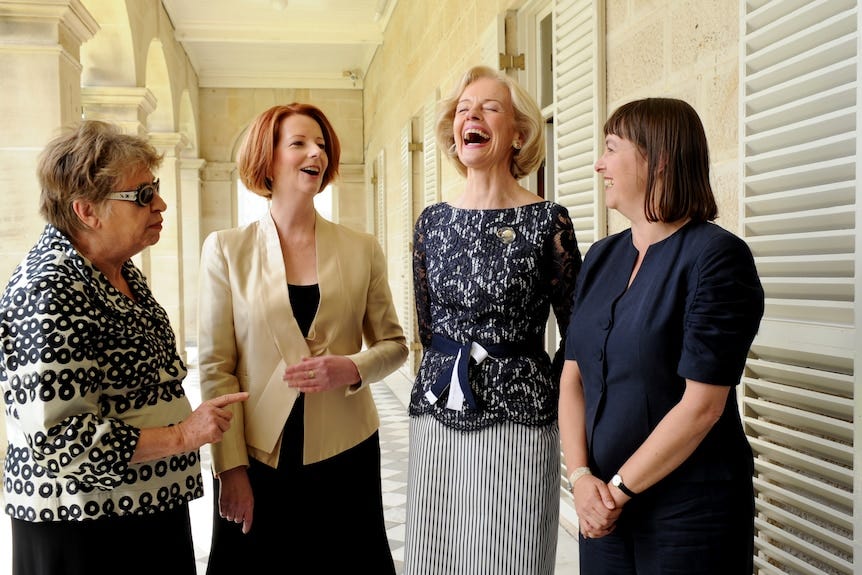
NSW Bar Association figures tell a similar story. In 2024, women made up about 26 per cent of practising NSW barristers, but less than 16 per cent of silks, and while the Law Council announced this year that its equitable briefing targets had finally been reached for the first time, the targets themselves were modest: women receiving 30 per cent of briefs and 30 per cent of briefing fees. Women ultimately received 32 per cent of briefs and 31 per cent of fees.
That is progress, but it is also a fairly extraordinary statistic to be celebrating in a profession in which women now make up the majority of lawyers.
Mary’s Gaurdon’s lasting legacy
Gaudron retired from the High Court in 2003 and later served on the International Labour Organization’s Administrative Tribunal. She died at 83, more than five decades after first forcing her way into a profession that had repeatedly made clear how little space it intended to give women.
Mary Gaudron’s legacy deserves to be reported because she was the first woman to sit on Australia’s High Court, but the more interesting legacy is what she did with the power she accumulated once she got there. She had a hand in changing how Australia valued women’s work; she helped secure maternity leave and job protection for working mothers; she sat on the court that recognised native title in Mabo; and she spent decades openly challenging a legal profession that congratulated itself for allowing women through the door while continuing to concentrate its greatest power in male hands.
Gaudron’s career was full of firsts, but she never treated firsts as the finish line. For her, equality meant changing the institutions themselves, not simply allowing women into them.
“Go to it!” was Mary Gaudron’s call to women. “Go be yourselves!”
Reported and written by Samantha Blok for The Jezebel Report.
The Jezebel Report is an independent feminist publication investigating faith, power, purity culture and church accountability.
Have information, documents or experiences relevant to this investigation? You can contact Samantha confidentially.
Follow The Jezebel Report on Instagram @thejezebelreport and on Facebook
Follow Samantha Blok on Instagram @samanthablok_ and on Facebook